Basic Astronomy and Observation Programme
Welcome to Cranfield Astronomical Society.
Our regular weekly meetings are Thursday evenings. To receive the information to join the events, please join using the registration link.
Our main communication is through emails to registered members.
Our Facebook, Twitter and WhatsApp are also channels used by the community.
Introduction
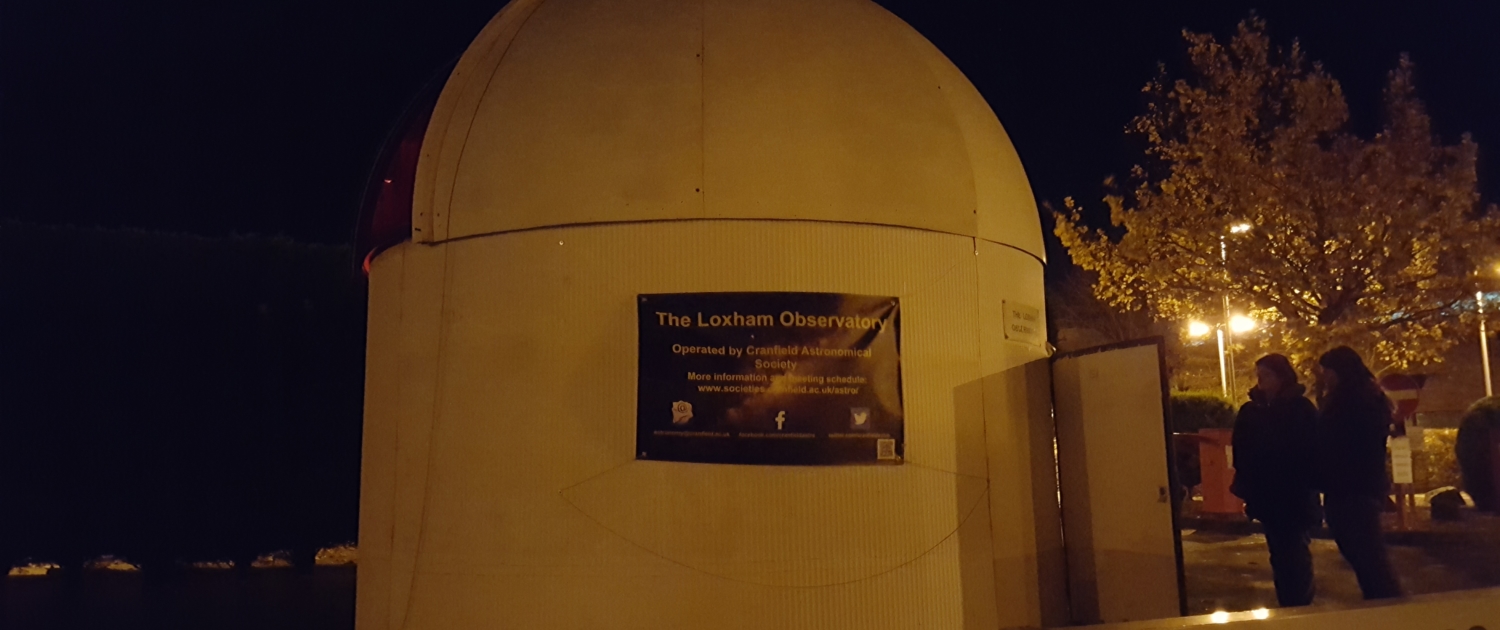
The Cranfield Astronomical Society aims to provide a forum at Cranfield for the discussion of all astronomical matters, to encourage amateur observation and to operate, on behalf of the University, the observatory which was built to house the telescopes.
We are a friendly group and a happy blend of novices and experts.
As we are a community of volunteers, we do not have the resources to entertain personal events like birthdays, anniversaries and ad hoc visits.
Basic Astronomy Course
As part of our regular meetings, the Society runs a Basic Astronomy and Observation course on Thursday evenings.
The programme starts in October and runs just before Easter. It is designed to help you enjoy astronomy without any background.
The cost of membership is £10 for students and staff of Cranfield University (this includes the course and use of equipment). Persons not related to Cranfield University can join as Associate Members.
2025 Autumn Term Programme
Programme from October 2025
Regular meetings are in person this term.
The location for meetings is emailed to members who registered.
Please registration with this FORM
| Evenings could be cold, please come in warm clothes and thick socks.
You are welcome to bring your own instruments. | Evening sky Moon ephemeris | |
|---|---|---|
| Date | Topic | Moon Ephemeris (% illuminated, Rise/set). |
| 9 Oct | 1st Open Night at the Loxham Observatory, Duncan Road. Wear warm clothing. | 94.6% 1 day past Full, Rises 1853BST |
| 16 Oct | 2nd Open Night at the Loxham Observatory | 24%, Sets 16.37 Dark sky |
| 23 Oct | An Introduction to Practical Astronomy How to how to get started with observational astronomy. | 3.9% Sets 1759 BST Dark sky U.T. starts 25th/26th |
| 30 Oct | Astronomy Software & Apps A guide to Stellarium and other Astronomy apps Demo 1. Binoculars Skywatch for November | 61.5% Sets 2343 UT Meridian Pass 19.00 Note: |
| 6 Nov | Observing The Moon Visually interpreting the Moon’s features. Demo 2. Refracting Telescopes. | 99.5% 1 day past Full Moon Meridian pass 0006UT |
| 13 Nov | The Gallilean Moons of Jupiter A look at Jupiter’s 4 largest satellites | 39.2% Sets 1356 Dark sky |
| 20 Nov | Astrophotography using Smartphones How to get the best images using your mobile phone’s camera. Demo 3. Reflecting telescopes | New Moon Dark sky |
| 27 Nov | Aurorae What causes them, how to observe and photograph them. Skywatch for December | 44.3% Sets 2246 Good sky before sets Dark sky thereafter |
| 4 Dec | An Informal Session Q & A, a look at books etc, a chance to show your astro images and, if fine, observing at the observatory | Full Moon Meridian pass 2351 |
| Observing will follow each talk, weather permitting. | ||
| All programme are subject to changes. |
About us
The Cranfield Astronomical Society membership is mainly Cranfield University students and staff. It is one of the active local amateur astronomical societies and helped many to enjoy the night sky.
Meetings
The Society meetings are held on Thursday evenings at 7:30pm on the main Cranfield campus, except when events or lectures are organised elsewhere. As much as the weather permits, observation at Loxham Observatory is prioritised. Special observing sessions are arranged, not necessarily Tuesdays, to enable newcomers to gain experience or to observe incidental astronomical events.
The Observatory
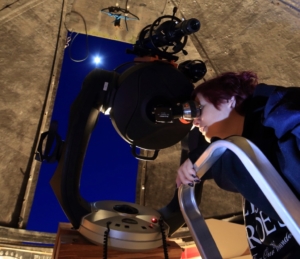
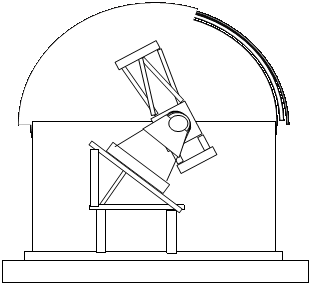
The observatory is equipped with a Celestron C11 telescope on a powered equatorial mounting. Facilities exist for simple astrophotography through the main equipment. Some computer software is available for demonstration and observation calculations. There is also a range of portable equipment for offsite observation.
Members of the Society are permitted to operate the telescopes at their own convenience, provided they are able to demonstrate competence in doing so. Training is provided.